
Multidisciplinary Research: Finance, Environmental Studies & Wellness
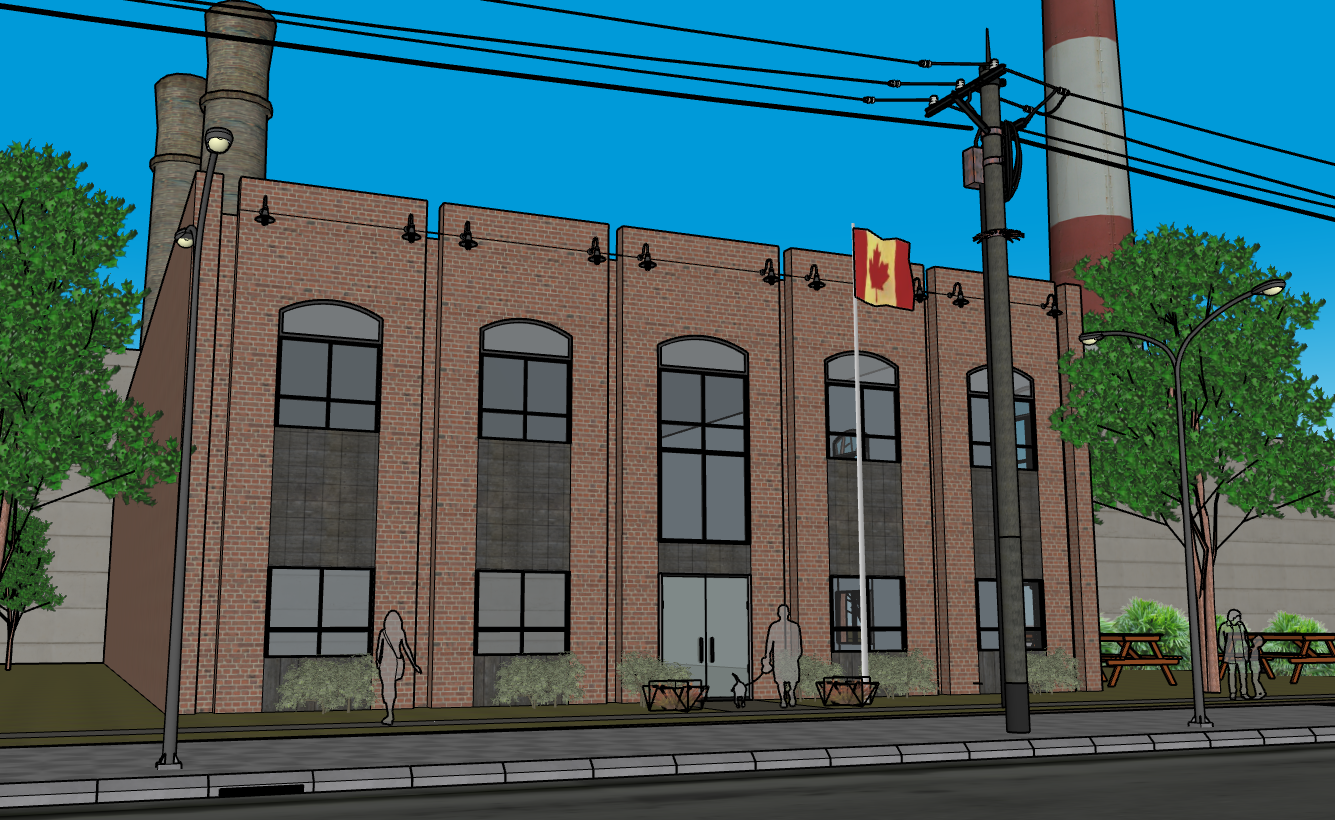
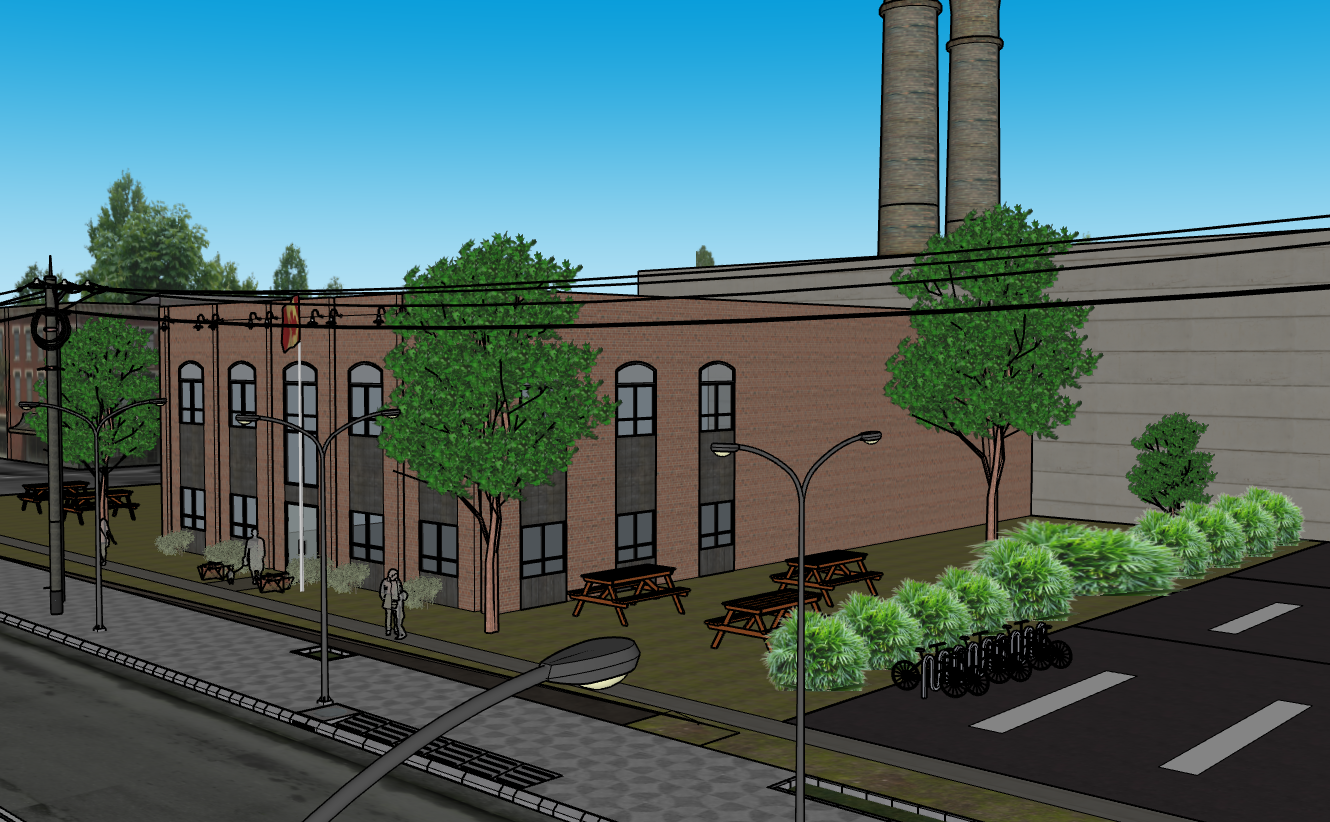
3D Rendering of adaptive reuse project and community integration created by researcher
ADAPTIVE REUSE IN RURAL COMMUNITIES:
DEVELOPMENT OF EMPLOYMENT OPPORTUNITIES IN THE CITY OF ORILLIA, ONTARIO, AS A MEANS TO SUPPORT RESIDENTS AND IMPROVE SERVICES
Along highways and throughout small cities across Ontario, abandoned buildings are common; homes, warehouses, businesses, and gas stations are typical structures left empty in declining communities. These empty buildings often stem from population decline in rural and small towns in Ontario. Through solution-based research, this thesis aimed to redevelop abandoned buildings in communities and examine how the effects of abandonment translated to the environment and the wellness of those still living in these areas. The research used an interdisciplinary lens to analyze field study findings and existing studies, demonstrating how academic concepts can be applied to a theoretical case study using a medium population centre in Ontario.
The research focused on financial stability, environmental issues, and wellness and reached its conclusion through these topics. Financial instability is not a new concern for Canadians and has been a growing topic of discussion. Due to external and internal factors, household incomes have not kept up with inflation, which stresses the body and leads to negative health outcomes (Kuhnert & Palmer, 1991). Anecdotal and academic evidence shows that individuals and families have migrated to larger metropolitan cities to find financial stability (Strauss, 2023). However, during that migration, they experience other forms of stress, creating separate wellness concerns (Thomson et al., 2025).
Because people migrate to larger areas for financial stability, buildings are abandoned in small cities. Homes go unsold to new residents, and businesses close due to a lack of customers. Empty buildings contribute to environmental erosion from the materials used in their construction and from what they housed. Without environmental clean-up initiatives, building materials will continue to leak into the environment. These financial and environmental concerns affect overall wellness and how we interact with the world. After identifying these problems, the research question became: How can Ontarians redevelop small cities using existing abandoned buildings to foster growth, sustainability, and wellness?
Methodology
Beginning with academic research of existing studies, using keyword searches to find peer-reviewed studies that examined causes leading to population decline in small and rural communities, financial decision-making external and internal to household structures that would affect job security, environmental concerns as populations decline, as well as how climate change has been experienced in small towns. Furthermore, because anecdotal evidence suggests nature can positively affect wellness, a challenge of this research was finding academic evidence showing a positive or negative connection between nature and wellness. The hypothesis of these findings was that if we can use existing buildings, through an adaptive reuse project, to bring new career opportunities to small cities in Ontario, it can help stabilize income levels, improve the environment through the redevelopment of the unused building and improve the wellness of citizens due to their existing connection and proximity to nature.
Additionally, field study findings included a small city in Ontario, companies that prioritized environmental concerns in their business models, a country that prioritized environmental policies to meet net-zero goals, and a building strategy whose environmental procedures consider both the physical environment and the wellness of the building's users. The academic research and field study findings were combined into a case study to analyze the potential outcomes of redevelopment in a medium population centre. The research used published reports from the case study city to understand the city's future direction, sustainability initiatives, and goals.
Although the case study found that a redevelopment project of the proposed size would not be feasible within the city limits, further study is required to determine whether the project would succeed outside the city or located between multiple medium population centres. The research supports a positive outcome for redevelopment and job opportunities; however, the location, size and type of business opportunity need further development.
Key Academic Findings
Finance
The Government of Canada released a study by Jacqualine Ha (2025), showing population growth in rural and small towns, but metropolitan areas grew at fifteen times the rate (Ha, 2025), suggesting that even with remote work opportunities, small-town growth could not compete. Furthermore, the study found that businesses struggle to keep skilled labourers in rural communities, partly because larger areas offer higher pay with consistent hours, leading employers and potential investors to turn toward new technology or the sciences for business opportunities.
Demographics identified by Kendra Strauss (2023) mirror the insecure job prospects in rural areas and residents' intra-provincial migration to larger cities for better opportunities. Additionally, the Government of Canada found that the clean technology sector has underrepresented employment opportunities for women, Indigenous People, and people of colour (Canada’s Regional Economies, 2023).
Langstan and Shen (2007) created a case study in China examining the costs involved in an adapted reuse project. The results showed that corporate decision-makers alone decide what kind of capital investment they are willing to make during redevelopment. Their research notes that community members favoured investors who maintained the building's heritage and community connection, and often supported those businesses through patronage (Langston & Shen, 2007).
Michael P. Johnston (2001) examined the social and environmental responsibility held by today’s decision-makers to leave a better society for the next generation. Johnston (2001) examined the cost-effectiveness principle, which suggests a compromise by implementing government policies to protect resources and apply associated fees for their use. This raises affordability issues for individuals and businesses; it also creates problems if taxes are raised to benefit the environment, such as the carbon tax that was eliminated in Ontario or the ones in Europe.
Environment
Environmental issues were brought to light at a global scale in 1987, when the United Nations released the Report of the World Commission on Environment and Development (also known as Our Common Future) (UN. Secretary-General & World Commission on Environment and Development, 1987). In it, sustainability and the effects humans had on the planet came to light. The report pointed to areas needing improvement for a healthier society and planet, including overfarming, waste production, and the use of natural resources. In 2015, when the Paris Agreement was signed, there was a stronger push toward environmental responsibility. Many countries adopted new policies to support lowering greenhouse gas emissions.
A review of adaptive reuse strategies by Lanz and Pendlebury (2022) suggests that a barrier to corporate investment is a lack of understanding of the financial and environmental costs. Adaptive reuse encompasses so many forms and techniques that it can confuse people outside the building and sustainability industries (Lanz & Pendlebury, 2022).
Wellness
Liu et al. ’s (2022) study confirms that a connection to nature increases well-being. The study showed that even those exposed to trees on their walk to work experienced lower rates of depression compared to those who did not. Furthermore, their study demonstrated that those with exposure to nature also showed more interest in conservation volunteering, which meant spending more time in nature (Liu et al., 2022). The study was conducted in Brisbane, Australia; however, because this thesis's case study uses a city nestled by forestry and a waterway, the conditions are comparable, so residents would have a connection to nature.
Thomson et al.’s (2025) study participants reported lower life satisfaction, and Romans et al.’s (2011) study found that people living in rural areas and small cities reported lower depression rates than those living in larger metropolitan centres. The results are attributed to stronger connections with family and friends (their social structures); by contrast, those in larger cities had fewer close friends, saw them less often, and often moved away from family to live in urban areas (Thomson et al., 2025).
Field Study Findings
Cities and towns throughout Ontario experience the impacts of climate change. Melting ice and snow, along with increased runoff from the north, are driving spring flooding as global temperatures rise. These changes in water levels negatively affect both air and water quality. They also affect seasons, planting cycles, wildlife food sources, and migration habits.
The City of Orillia released two reports, “Planning for a Greener Future” (City of Orillia, 2024) and “Energy Management Plan” (City of Orillia, 2025), to reinforce its commitment to adapting environmental stewardship strategies. Their plans center on a tiered implementation process, including transit, city building upgrades, and alternative energy sources (City of Orillia, 2024). However, despite already beginning to implement these changes, emissions continue to rise. The tiered implementation process is for budgetary reasons; it allows emissions to remain at the same rate or continue to rise for longer. The city’s plan accounts only for city-owned vehicles and buildings (City of Orillia, 2024) and does not address financial stability or affordability for residents. Transitioning to clean energy sources and sustainable action may help the City of Orillia for a time, but without widespread change, its actions will have little impact on the broader net-zero goal stated in the Paris Agreement.
A field study that demonstrates business acumen and environmental stewardship comes from Mountain Equipment Company (MEC). They are an outdoor lifestyle company with locations across Canada. Their commitment to communities and the environment is demonstrated through the products they offer and their partnerships with national parks and children’s groups to teach outdoor responsibility and fun (National Partners - MEC Outdoor Impact, 2026). When opening new locations, MEC examines locations and buildings similarly to how Langston and Shen’s (2007) study describes building analysis. MEC compares new construction options with adaptive reuse projects and assesses how each may benefit the company, community, and environment.
For the Mountain Equipment Company location in Barrie, Ontario, a new structure for the retail outlet was built with the environment in mind. An environmental feature for this location includes native plant life to reduce watering needs and support the local wildlife (MEC Opens Newest Store in Barrie, Ontario | SGB Media Online, 2010). As an outdoor lifestyle company, environmental responsibility appeals to their consumer base, building loyalty and supporting customers' wellness through an active lifestyle and continued purchasing power.
Dockside Canada House in the UK was used as a field study example of WELL v.2 building strategy, which benefits the environment, building users, community members, and businesses in the surrounding area. Dockside Canada House is designed to promote a holistic, balanced lifestyle. The facility supports air and water quality through operable windows; the surrounding green spaces are open for public use, and the building operations team partners with community organizations to bring people into the building and encourages employee volunteering (Sport, Fitness & Wellbeing Facilities at Canada Water, 2024). They also partner with local gyms for indoor and outdoor activities and provide healthy food options in or near the facility to promote balanced nutrition (Sport, Fitness & Wellbeing Facilities at Canada Water, 2024). All of which contributes to an individual's interconnectivity with their community, actions, and wellness.
Sweden was also used as a field study. It has a robust recycling and waste management program, along with environmental taxes and credits for both individual citizens and companies it was an example of how countries can use policies to meet net-zero goals. Sweden promotes an active lifestyle and a healthy work-life balance to support citizens' wellness. After signing the Paris Agreement, Sweden intensified its environmental policies and initiatives. Sweden generates power through multiple forms of clean technology, including wind, solar, and waste-to-energy, which involves diverting household waste from landfills for incineration. Sweden has reached a point where it imports waste from outside the country to generate energy and income, which it reinvests domestically.
Sweden tracks emissions levels by industry and publishes projected net-zero targets online for public analysis. With new policies in place, Sweden is currently on track to reach net-zero by 2045. However, there is a noticeable spike recorded in 2024 (“Panorama – Roadmap for Transition,” 2026). This emission increase coincides with a change in the ruling party and leadership. When this change occurred, the new leader eliminated additional sustainability taxes and credits, which changed spending decisions for citizens and corporations. These changes demonstrate that government policies play a vital role in decision-making, spending habits and environmental stewardship.
Implications for the community
The research suggests that an adaptive reuse project is possible in the idea phase; however, any company or city interested in further development would need to evaluate and balance redevelopment costs with community value, and reconsider location and size requirements. As in the Lakhan (2015) and Langston and Shen (2007) studies, decision-makers could choose to pursue adaptive reuse or cost-saving alternatives, such as new construction, based on company values. Through examinations of the academic research, field studies and the case study, along with the Durham York Energy Centre as a point of reference, a few practical applications may hinder development within the city limits. Redevelopment within the city would not work because any alternative clean-technology facility would need much more space than is available. A waste-to-energy facility would need to be developed outside the city. Space requirements are not the only concern; a facility within a city would also increase noise pollution and reduce air and water quality.
Currently, the Durham York Energy Centre facility in Ontario diverts up to 90% of household waste from the area (Durham York Energy Centre, 2026). The facility burns approx. 140,000 tonnes of waste per year, which can power approx. 10,000 homes (Durham York Energy Centre, 2026). Using the City of Orillia, Ontario, as an example, which has approximately 15,000 private dwellings, the energy generated by the facility could support local jobs and offer alternative clean energy solutions. Incineration releases carbon, which could affect emissions levels in the area, but the facility uses multiple monitoring systems to protect air and water quality, along with third-party audits and a public monitoring website that provides real-time data (Durham York Energy Centre, 2026).
A facility of this nature in the area of the City of Orillia has the potential to bring new jobs to the area, create long-term stable employment as the city transitions to clean technology, decrease landfill waste, and help keep residents within their communities and social structures: all of which will contribute to positive wellness within the community.
Based on reports published by the City of Orillia, residents support initiatives that contribute to sustainable action and net-zero goals. The studies that led this research to select the City of Orillia as a case study were: Strauss (2023) data indicating that even those with full-time employment often seek second incomes to offset what the first job lacks, such as affordability, health and childcare benefits, or employment closer to home. Thomson et al. ’s (2025) findings showed that individuals living in medium population centres report lower life satisfaction and a strong connection to social structures. Roman et al.’s (2011) findings on depression rates, along with the City of Orillia’s documented commitment to adapting to sustainable changes to meet the Paris Agreement goals and its roadmap to transition to clean technologies.
Results
The research suggests that although a waste-to-energy facility would not solve financial instability, climate impacts, and wellness issues experienced by those in rural and small towns in Ontario, it does have mitigation potential. A waste-to-energy facility diverts household waste from landfills to create energy that can be fed into the existing Ontario grid. The city’s proximity to nature, and research findings about its connection to nature, suggest residents' dedication to environmental protection and conservation efforts.
Future research will examine development outside a medium population centre, along with environmental cleanup costs. Although the data points discussed make the City of Orillia an ideal case study for developing a roadmap to further clean technology in Canada, the waste needed to generate the required energy means the city itself could not dispose of it. The facility would have to ship in additional waste from surrounding areas to maintain production capacity.
The analysis and synthesis show that change and redevelopment can improve the wellness of individuals in small cities across Ontario and Canada. However, changes must occur at multiple levels. Individual citizens must push themselves, their neighbourhoods, and their family members to prioritize environmental stewardship. Local governments must also take steps to make environmental changes that support the future of public health and affordability within their communities. Provincial and Federal governments need to enact policy changes that support long-term environmental sustainability. High-level policy changes can create a trickle-down effect, and bottom-up pressure from citizens can push local governments to shift their perspectives to better support affordability, sustainability and wellness.
Click Here to read the full thesis.